
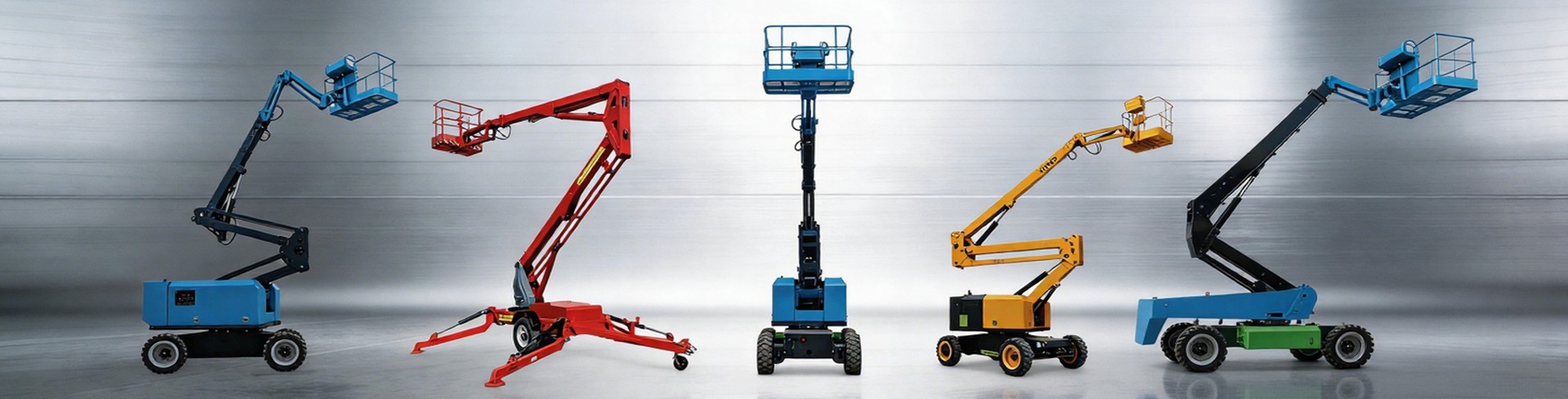
Self-propelled scissor lifts, as a flexible mobile lifting platform, have become indispensable equipment in various fields such as modern industry, construction, and warehousing. Combining mobility and lifting functions, they provide convenient solutions for high-altitude operations in various working environments. This article aims to explore the wide application of self-propelled lifts in modern work scenarios and the significant value they bring.
Application Areas
1. Construction: In high-rise building construction, interior decoration, and building maintenance, self-propelled lifts provide a safe and reliable platform for workers to perform high-altitude operations, significantly improving work efficiency and safety.
2. Industrial Manufacturing: In maintenance of production lines, equipment installation and commissioning processes, self-propelled lifts can quickly move to the work site, providing efficient high-altitude operation services, reducing downtime.
3. Warehouse Logistics: In warehouses, for tasks such as shelving and picking, self-propelled lifts can adjust the height of the operation platform according to the height of the shelves, optimizing warehouse management.
4. Commercial Retail: In large shopping malls, exhibition centers, etc., for exhibition setup, advertising board installation, etc., high-altitude operations, self-propelled lifts, with their flexibility and convenience, become ideal operation tools.
5. Public Facilities Maintenance: Including street lamp maintenance, traffic sign installation, park tree pruning, etc., public facility maintenance work, self-propelled lifts provide effective high-altitude operation solutions.
Value
1. Enhancing Work Efficiency: The high mobility and flexibility of self-propelled lifts enable workers to quickly reach any position requiring high-altitude operations, significantly improving work efficiency.
2. Ensuring Work Safety: Compared to traditional scaffolds or ladders, self-propelled lifts provide a more stable and convenient operation platform, significantly reducing the safety risks of high-altitude operations.
3. Saving Human Resources: The operation of self-propelled lifts is simple, usually requiring only one person to complete the entire high-altitude operation process, reducing the investment in human resources.
4. Reducing Maintenance Costs: The design of self-propelled lifts focuses on durability and maintenance convenience. Compared to fixed-type lifting equipment, the maintenance costs during long-term use are lower.
5. Wide Adaptability: Whether indoors or outdoors, on flat ground or uneven ground, self-propelled lifts can adapt to different working environments and meet diverse operational needs. Conclusion
Self-propelled elevators, with their unique flexibility, safety, and economy, are playing an increasingly important role in modern working environments. They not only provide a safer and more efficient solution for high-altitude operations, but also bring significant economic benefits to enterprises by improving operational efficiency and reducing costs. With the continuous advancement of technology and the diversification of work demands, the design and functions of self-propelled elevators are constantly being optimized and upgraded to better meet the specific needs of different industries.
In the future, the application scope of self-propelled elevators will further expand, and their intelligent and automated levels will also be significantly improved. For example, by integrating technologies such as sensors, GPS positioning, and automatic navigation, self-propelled elevators can achieve more precise positioning and more autonomous movement, further enhancing the safety and efficiency of operations. Additionally, as people's demands for efficient operations and safety and environmental protection continue to grow, self-propelled elevators will also develop in a more energy-efficient and environmentally friendly direction, such as adopting electric or hybrid power systems to reduce emissions and noise.