
Choosing the right aerial lift requires a clear understanding of the differences between indoor lifts and outdoor lifts, as their design, performance, and application scenarios vary greatly. Making the correct choice can significantly improve safety, efficiency, and equipment durability.
Indoor lifts, typically electric scissor lifts and mini vertical lifts, focus on quiet operation, zero emissions, and compact size. They are engineered to work on smooth floors, avoid damaging interior surfaces, and fit through narrow doorways and elevators. Without the need for wind resistance or rough-terrain capability, they prioritize clean, efficient movement for renovation, maintenance, and warehouse tasks.
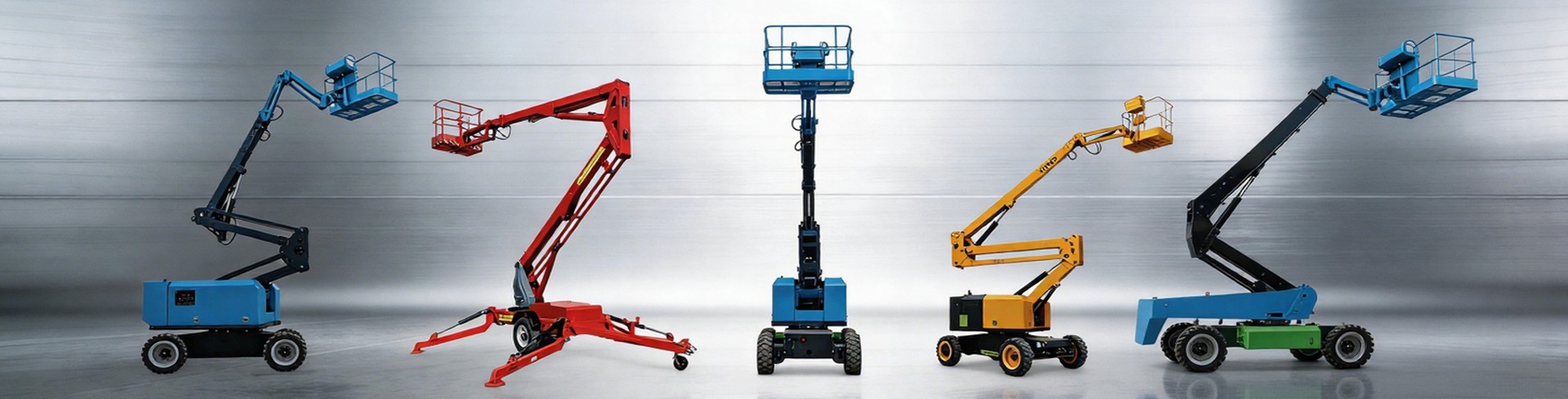
Outdoor lifts, such as rough-terrain scissor lifts and boom lifts, are built with stronger chassis, larger tires, and weather-resistant components. They are designed to handle uneven ground, wind loads, and outdoor construction conditions. Most outdoor models offer diesel or dual-power options for greater torque and stability on muddy, gravel, or sloped surfaces.
Understanding these key differences helps businesses select the most suitable lift for their working environment, ensuring both operational efficiency and long-term reliability.
News