
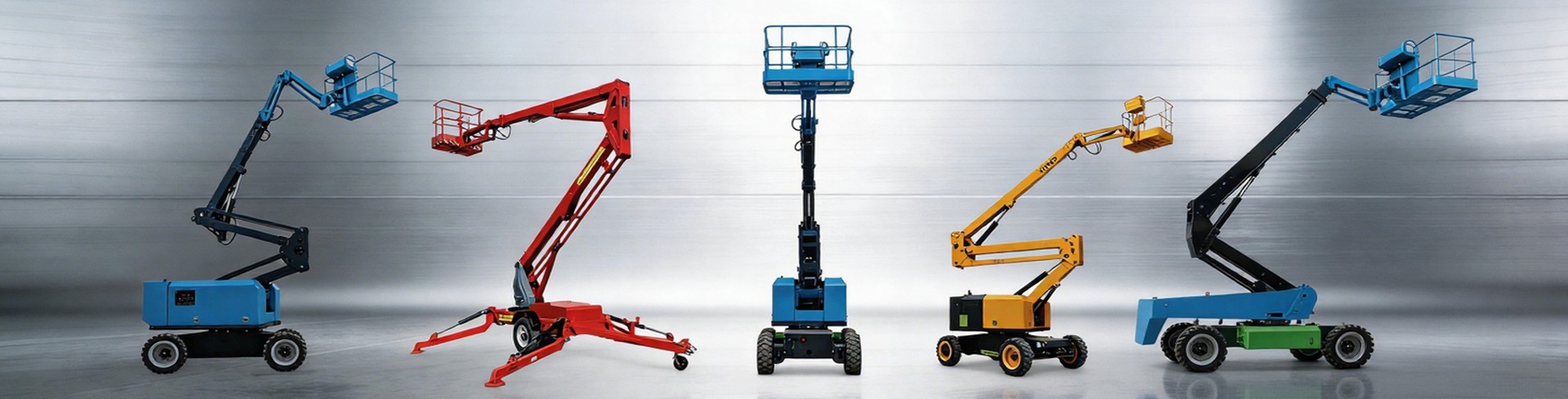
Among various aerial work platforms, telescopic mast lifts occupy a unique position due to their specific performance advantages:
Ultra-compact and Easy Access
The width of telescopic mast lifts is generally controlled between 0.75 and 1.0 meters. This means they can pass through standard single-leaf doors or directly enter passenger elevators without disassembly.
Superior Maneuverability
Most telescopic mast lifts adopt front-wheel steering or zero-radius steering design. In narrow warehouse aisles, they can rotate 360 degrees on the spot, providing flexibility that bulky scissor lifts cannot match.
Lightweight Design and Floor Protection
Weight is critical for indoor environments with raised access floors or expensive finishes. Telescopic mast lifts are usually much lighter than scissor lifts of the same height specification, effectively dispersing ground loads.
Vertical Precision and Stability
The telescopic mast structure places the center of gravity above the chassis, offering greater rigidity than the cross-bracing structure of scissor lifts and minimizing sway for operators at height.
Industry Application Scenarios: Where Are Telescopic Mast Lifts Used?
· Warehousing & Logistics:In high-density warehouses, telescopic mast lifts can easily access narrow aisles for inventory counting, barcode label repair, and overhead structure inspection.
· Facility Management:Used for replacing light bulbs in shopping mall atriums, cleaning interior glass curtain walls, or maintaining ceiling HVAC ducts.
· Manufacturing:Technicians use telescopic mast lifts to move vertically between machines on complex production lines without disrupting surrounding operations.
· Data Centers and Clean Rooms:Fully electric drive ensures zero exhaust emissions, and the lightweight frame protects raised computer floors from damage.
· Retail and Cultural Venues:In supermarkets or museums, they usually operate in narrow aisles or among delicate displays with extremely low collision risk.
Safe Operating Procedures and Routine Maintenance
Pre-operation Inspection Checklist
· Visual Inspection: Check the mast structure for hydraulic leaks and cracks.
· Battery Status: Ensure sufficient power and adequate electrolyte levels.
· Safety Tests: Verify the sensitivity of emergency stop buttons, limit switches, and tilt alarms.
Personal Protective Equipment
· Operators must wear compliant full-body safety harnesses.
· Lanyards must be secured to designated anchor points on the platform at all times.
Regular Maintenance
· Monthly: Clean mast slides and apply special-purpose grease.
· Annually: Invite certified technicians to conduct structural non-destructive testing (NDT) and hydraulic pressure testing.